
This is part of a series on conversational intelligence: where the intelligence is today, and how to use it well in business.
Capturing conversations is not the same as understanding them.
So that sentence sits underneath every technology in this series. Sentiment analysis, emotion-aware AI, real-time translation, voice AI. Each of them produces data about what was said. But none of them, on their own, produces understanding of what it meant.
And that distinction has practical consequences for any business buying these tools.
What monitoring looks like
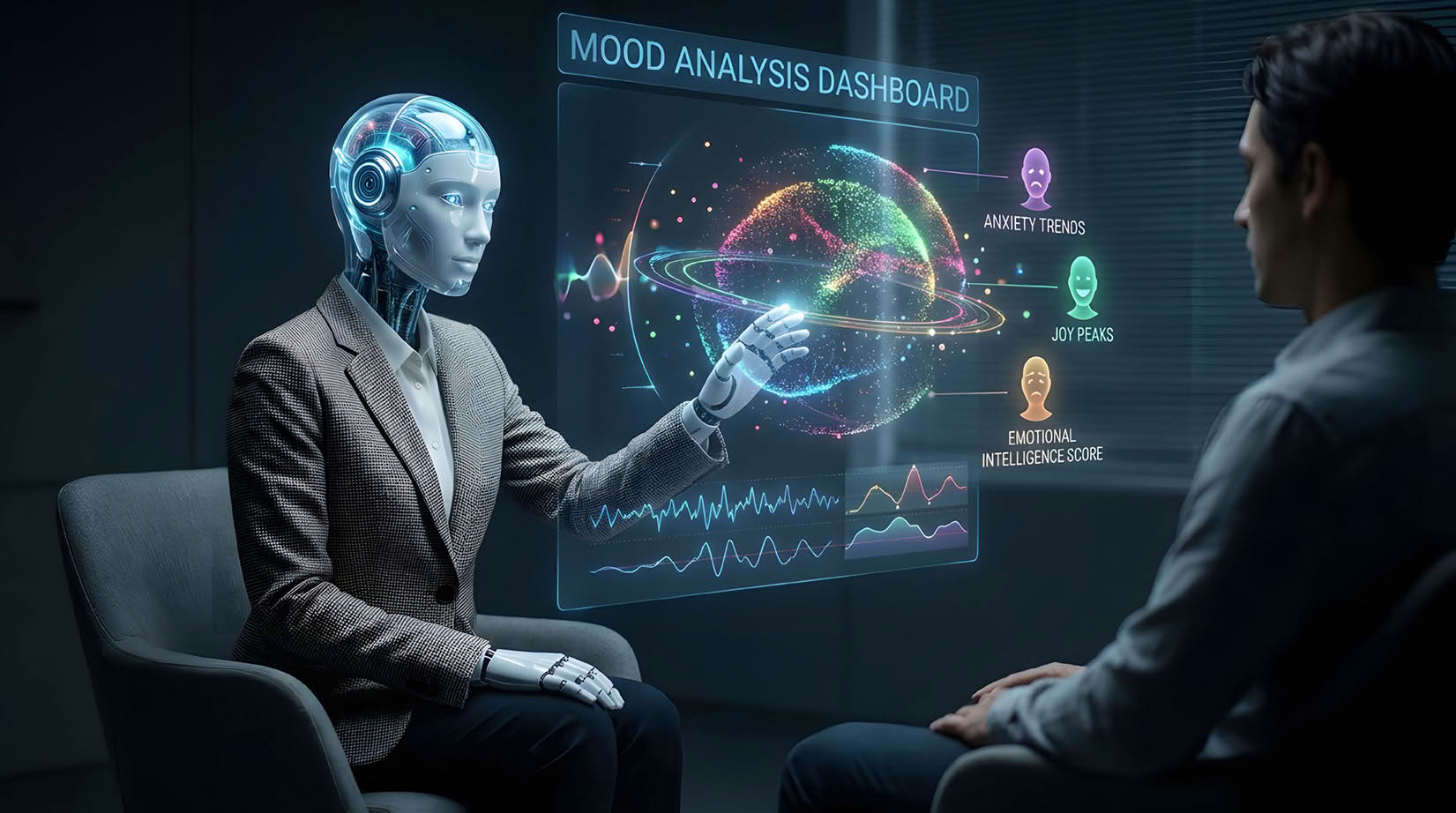
A business that has invested well in conversational technology can monitor a lot. Every call is recorded and transcribed. Chats logged. Emails indexed. Reviews parsed. Sentiment is scored on a scale. Topics tagged. And patterns flagged.
That is real. So, it is also useful. A business with that infrastructure knows more about its operations than a business without it.
But monitoring describes the surface. It tells you what was said, how often, by whom, with what emotional valence on the surface. So, it produces a record. The record is a starting point, not a conclusion.
Where understanding lives
Understanding sits one layer beneath monitoring. It asks not what was said, but what it meant. Not how often a topic came up, but why. Not whether sentiment was negative, but what the negativity was about and whether the business response was appropriate.
But that layer requires judgment. Sometimes it requires context that the system does not have. When a customer sounds frustrated, they may not be frustrated with the business. They may be frustrated with a process that the business cannot change. Or they may be frustrated with something happening on their end of the conversation. The surface signal is the same. But the interpretation is different.
So, a monitoring system that reports rising negative sentiment in support calls has done useful work. But a business that responds by changing scripts before asking what the source of the negativity was has skipped the layer that matters.
Monitoring tells you what happened. Understanding tells you whether you should change anything because of it.
The themes this series has been building
This distinction has appeared throughout this series under different names.
In the post on sentiment analysis, the distinction was between sentiment and emotion. Sentiment is what a system can score. But emotion is what a person feels. The two are related but not the same, and treating them as the same leads to bad business decisions.
In the post on what AI can perceive, the distinction was between detection and interpretation. Detection identifies a signal. Interpretation asks what the signal means. So the signal arrives in milliseconds. But the interpretation requires context that the system rarely has.
And in the post on where emotion-aware AI stops, the distinction was between perception and empathy. A system can perceive the markers of frustration. But it cannot share the experience of being frustrated. That difference is not technical. It is the boundary between observation and presence.
These are all the same distinction, in different terminology. The technology produces signals. Interpretation turns those signals into meaning. And meaning is where business decisions live.
Why this matters operationally
A business that buys conversational intelligence tools without holding this distinction will use them poorly. The dashboards will be full of metrics. The metrics will be true. But the decisions they make may be wrong.
When sentiment trends down, it does not always mean the business is failing. It may mean the business is being honest about a problem it cannot solve quickly. Or that it is now reaching a customer base that holds higher expectations. Or that a recent product change is working as intended and producing short-term friction.
Repeat questions are not always a sign of failure. Sometimes they signal that a topic is important to customers and worth addressing more directly. Sometimes they signal that the documentation is poor. And sometimes they signal a regulatory requirement that the business cannot streamline.
Long calls are not always inefficient. Some long calls are the most valuable ones. And some short calls are the ones where customers gave up.
So, the metric is the starting point. The judgment is the work.
Where the discipline lives
A business that uses conversational intelligence well has people whose job is to translate the signal into understanding. They look at the data, ask questions the data cannot answer, talk to the people inside the conversations, and form a view that goes beyond what the system reports.
So that is not a technology role. It is a leadership role, supported by technology.
The discipline involves treating dashboards as questions, not answers. Asking what changed and why before deciding what to change. Holding the difference between a pattern and an explanation. And resisting the pull of action-bias in the face of metrics that are easy to read and easy to misread.
This discipline is what separates organizations that gain real intelligence from their conversations from organizations that have only invested in observation.
The close
The technology now exists to capture conversations at a scale that would have been impossible a few years ago. So that capability is real and worth investing in.
But monitoring is not understanding. Observation is not insight. And data is not knowledge.
What separates a business that benefits from conversational intelligence from one that merely subscribes to it is the discipline of asking what the data means, in context, with judgment, before deciding what to do about it.
So that discipline is where the value compounds. Without it, the dashboards keep filling, the metrics keep moving, and the business keeps responding to signals it has not yet understood.
The series on conversational intelligence
- Conversational Intelligence: How It Started
- Why Friction Was the Real Problem
- When Words Were Not Enough
- What Sentiment Analysis Became
- What AI Can Perceive
- Where Emotion-Aware AI Stops
- Cloud Before the Edge
- How to Add a Second Language
- Voice AI for Your Business
- Monitoring Versus Understanding (you are here)
- What Comes Next
About Mary Lee Weir
Mary Lee Weir has been building websites for 27 years and digital products in 7 countries. She holds U.S. Patent 11,587,561 B2 for a communication system and method of extracting emotion data during translations, and continues research and development in conversational intelligence. She runs Vero Web Consulting in Vero Beach, Florida, and founded Belize Web and Information Systems at home in Belize to serve Belizean businesses. She writes about AI, search, and the practical realities of building for the web at maryleeweir.com.
If any of this is useful
Book a 60-minute strategy call ($250) to work through how any of this applies to your specific business. Or start with a free 15-minute intro to see whether a longer conversation makes sense.