
When to Slow Down, Part 7. A series about gardening, stewardship, observation, operational intelligence, and the lessons that quietly shape how we build our lives, our businesses, and our technology.
It is fall now.
When to Slow Down was meant to be a summer series. I am finishing it a season late, which feels about right for a series about slowing down. The garden did not slow down at all.
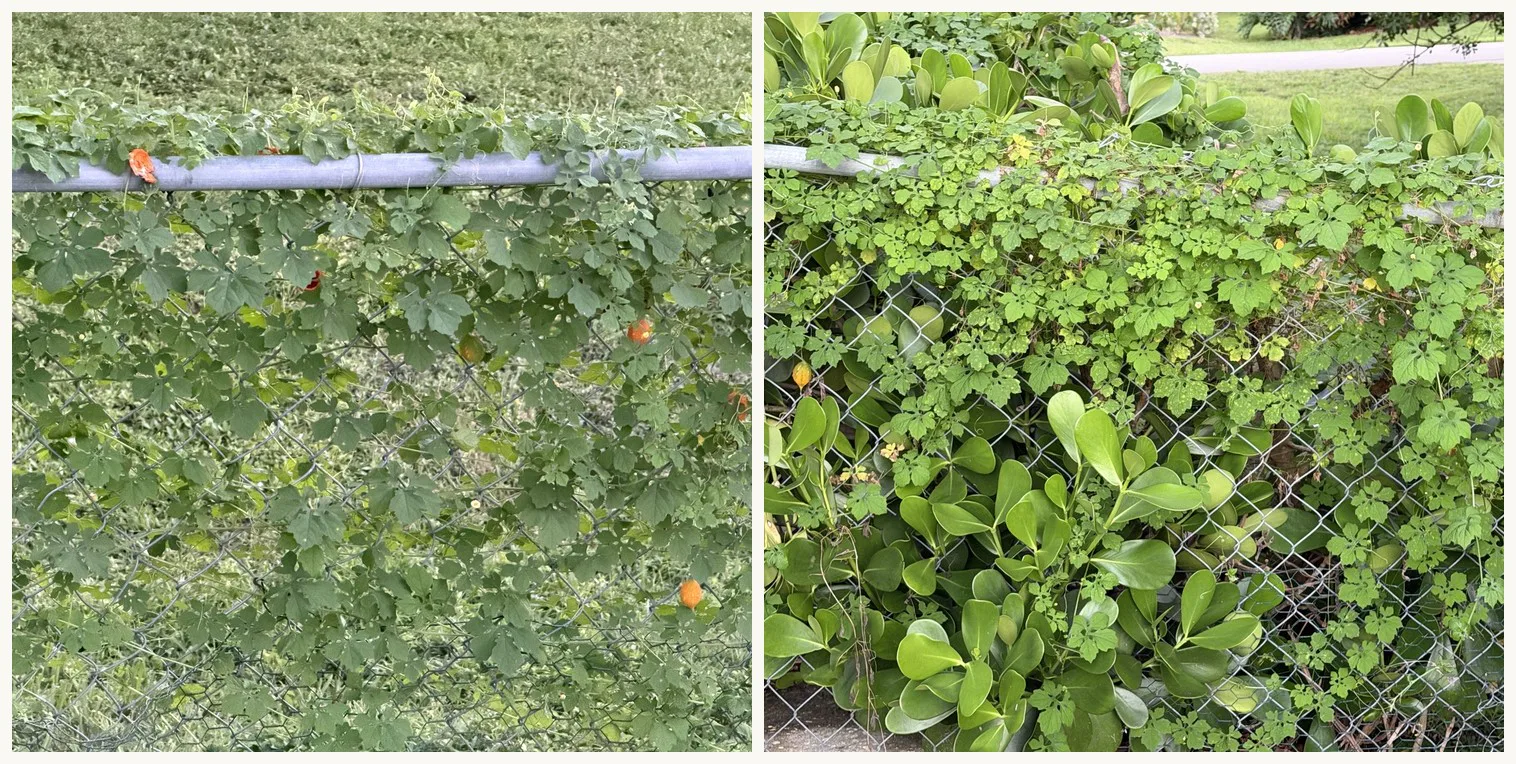
Sometime in late August, I noticed a vine growing along the fence.
I didn’t plant it.
This did not seem particularly important at the time.
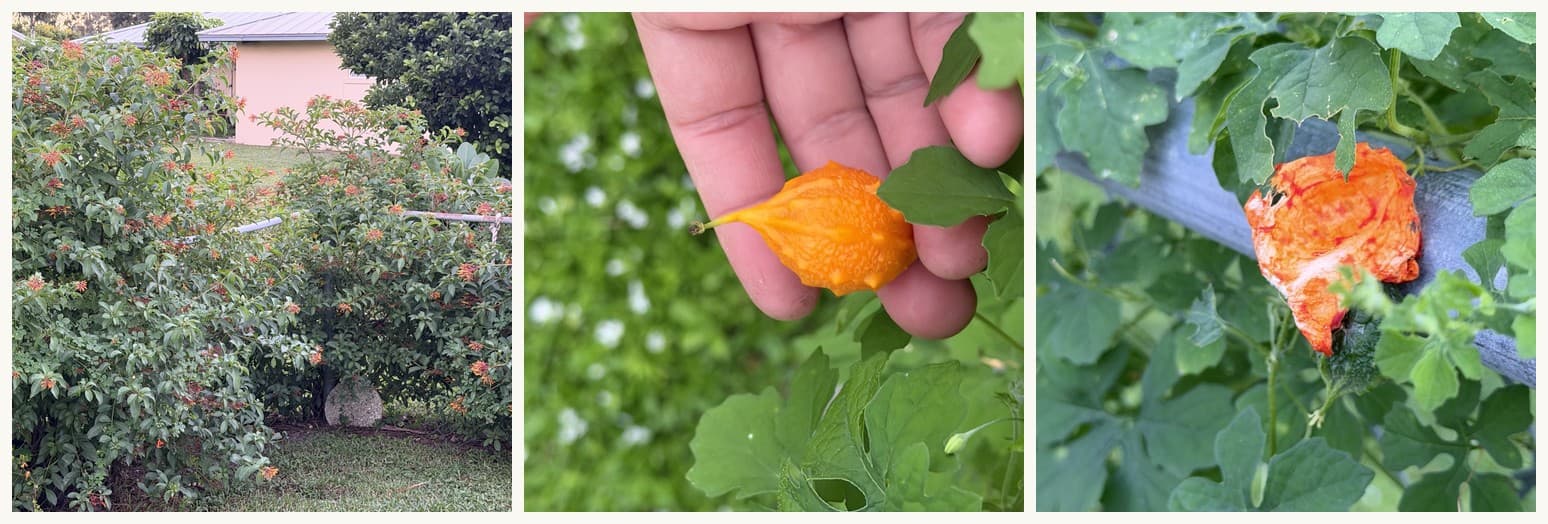
A month later, it runs in two directions, threading through the chain link, climbing over the firebush, flowering and fruiting as it goes.
Apparently, while I was practicing When to Slow Down, the vine had other plans.
Move fast. Find infrastructure.
Following the Vine
At first it looked like one vine minding its own business along the fence. So I started following it.
It wasn’t simply growing on the fence. It found the top rail and ran along it like a highway. It threaded through the chain link. It muscled into the firebush. It was flowering, small yellow flowers, and setting fruit. Some fruit was still green. Some ripened to a startling orange. And at least one had already split open, spilling seeds wrapped in bright red.
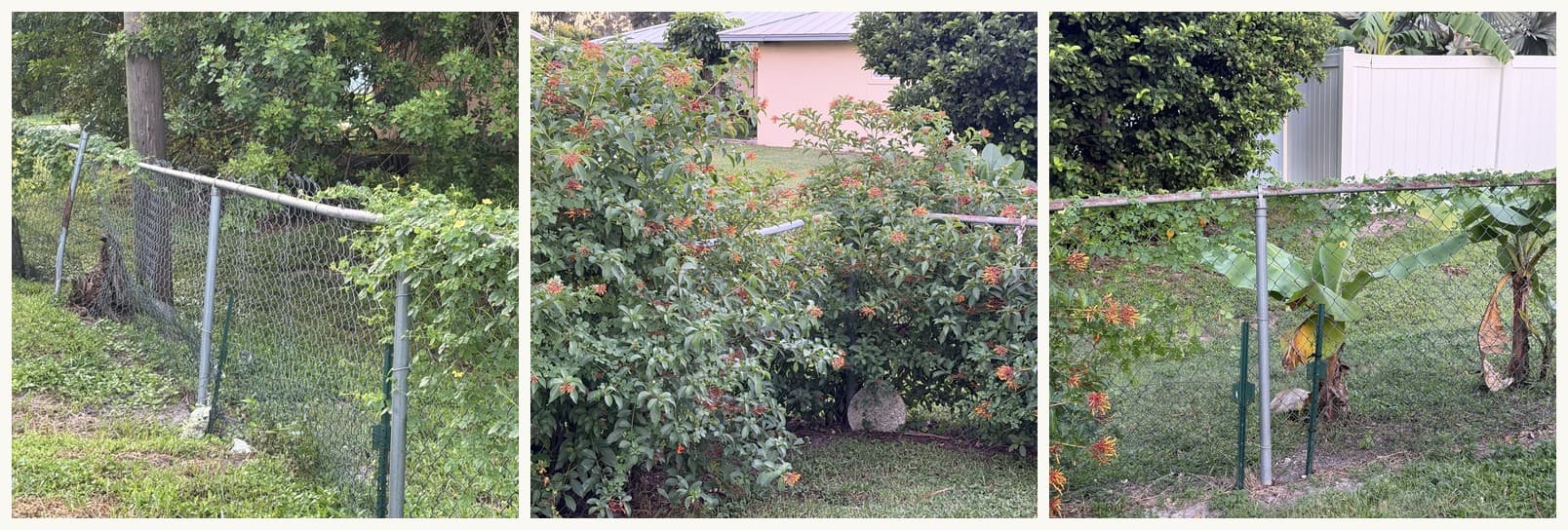
Then I realized the growth was coming from two directions, meeting somewhere in the middle. Not one vine wandering neatly from one end to the other. At least two plants, growing toward each other, while one of them, evidently finding a single direction too limiting, struck out the other way as well.
In one month.
“It’s organized,” I said.
For a moment, that seemed like the right description. There was clearly a plan. At least from the vine’s perspective.
Then I looked at the firebush.
If the vine is judging itself, I’m sure it feels organized. From everyone else’s point of view, we are well past trespassing.
By its own measures, the operation was going beautifully.
Bitter melon, conducting its own self-assessment: Excellent governance.
The rest of the garden: Ma’am, you are three shrubs deep into somebody else’s property.
The firebush would, naturally, like to file a formal complaint.
The Prime Suspect
The obvious question was how a plant I never bought, never planted, and never trained ended up taking over a fence. The next question was what it even was.
For that I did what I have done in gardens on several continents. I pointed my phone at it and asked PictureThis. I have used that app since it first came out, and it has more than earned its keep. It lets me travel almost anywhere in the world and keep learning about whatever happens to be growing around me, and it helps me manage my own garden besides. It answered in about a second: bitter melon. Momordica charantia, also called bitter gourd. The plant, it added helpfully, looks healthy.
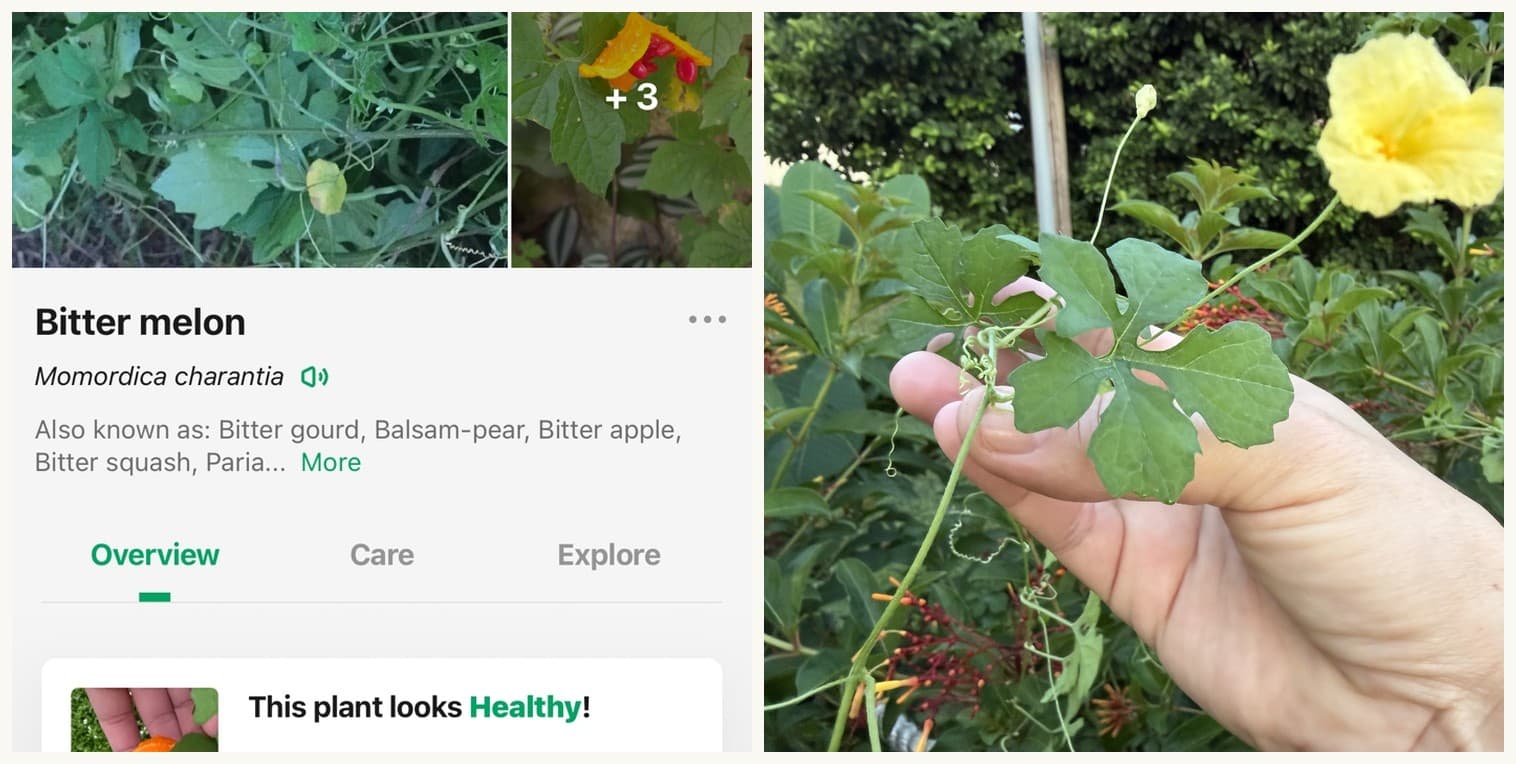
It certainly does. The deeply lobed leaves, the curling tendrils, the small yellow flowers, and those warty fruits that ripen from green to orange and finally split to show off red-coated seeds. Textbook, all the way down to the fruit that had already opened on the rail.
A bird feeder hangs on the opposite side of the yard, near the dracaena where the dragon fruit climbs. Birds move all day between the feeder, the shrubs, the fence, and the trees. A ripe bitter melon eaten somewhere else, a bird traveling that route, a seed deposited at the base of the fence, and nature handled the rest.
I can’t prove a particular bird planted a particular seed. But with the feeder right there, it is a very credible gardener. My birds may have paid their rent in produce.
A Rather Aggressive Reunion
There was also the question of what I was supposed to do with it.
I never planned to grow bitter melon. Yet I suddenly had enough of it along the fence to justify learning what one does with it. At which point I found myself seriously considering whether I was being divinely guided by nature to learn new recipes.
This is how gardening gets you. One minute you are inspecting a volunteer vine. The next you are reading about Caribbean and Southeast Asian cooking because a bird may have redesigned your dinner plans.
Except it may not even be new to me. I am half Caribbean, and I spent years living in the Far East, where bitter melon turns up in stir-fries, soups, curries, and egg dishes. There is a perfectly reasonable chance I have eaten it many times and simply never bothered to ask its name.
Which would make this less of an introduction and more of a rather aggressive reunion.
Remember me?
Apparently not.
So it took over the fence.
The Same Vine, Three Ways
Here is what I keep turning over.
The bitter melon is thriving. By every measure available to a bitter melon, it is doing spectacularly well. It found infrastructure, climbed it, flowered, fruited, reproduced, and expanded into whatever was next. It has done, enthusiastically, everything we increasingly ask a self-directed system to do.
The trouble is that its definition of success contains no concept of trespassing.
The fence was available. So was the firebush. To the vine, they are identical, both simply opportunities. The boundary between what was offered and what was not exists in my understanding of the yard, not in the vine’s objective.
It cannot see a line it was never given.
So the same vine has three entirely different meanings depending on where you stand.
The bitter melon says: successful expansion.
The firebush says: trespassing.
I say: possibly divine guidance, but let me find a recipe before making any theological commitments.
Same observable facts. Three readings. That is context, and context is not just more data. It is what lets us decide what the data means. Intelligence and organization are not the same thing as judgment; a system doing exactly what it was built to do is not evidence that the boundaries were right, and nothing governs itself well against a context it was never handed.
The Ugly Fence
One more thing I haven’t given the bitter melon enough credit for.
The fence is ugly. Chain link, practical and unremarkable, patched in the places where Lou used to escape when she was a puppy.
Lou is gone now. The patches remain.
And somehow, without my planting a thing, this vine has begun covering them. Leaves through the wire. Small yellow flowers. Strange little green fruits hanging where there used to be nothing much to look at.
I don’t think everything nature does needs to be read as a message. Sometimes a vine is simply a vine. But I know enough not to miss the beauty when it arrives.
It hasn’t replaced those patches, and it hasn’t healed them. It grew around them.
Lou, for the record, was a Catahoula, and she always came back. She wasn’t trying to leave home. She knew exactly where home was. She simply couldn’t tolerate the squirrels and rabbits taunting her from the wrong side of the fence, so she went to conduct field operations. Lou crossed the boundary and knew where she belonged. The bitter melon crosses it with no idea there is one.
There Are Limits
For now, I am leaving the vine alone. It does its job well, and removing it seems unnecessarily punitive.
I am even tolerating its unauthorized occupation of the firebush.
But I have noticed it eyeing the banana.
There are limits.
That, it turns out, is governance in its simplest form. I don’t need to control everything the vine does. I only need to know where the boundary is.
A boundary doesn’t have to mean stopping a system. Sometimes it just means: you may flourish here, but not there.
Smoky and Belle, I should note, have reviewed the entire situation and rendered their judgment. Bitter melon: not meat. Fence politics: not their department. They are perfectly content inside their little kingdom and have no interest in the borders at all. Apparently someone still has to mind them. It simply isn’t the dogs.
Why I Keep Going Outside
I went outside to look at my plants.
I came back with bitter melon, a possible bird-delivery conspiracy, several recipes to learn, an unresolved property dispute between a vine and a firebush, and something I wasn’t expecting to think about at all.
Lou.
This is why I keep going into the garden. Not for the harvest, though I will apparently be cooking bitter melon shortly. I go because if you stand there long enough, and look a little longer than you meant to, the garden hands you something you didn’t know you were looking for.
Sometimes you have to slow down long enough for something to find you.
The firebush may disagree with this governance decision.
But the fence has never looked better.
• • •