
I Thought It Was Corn
This is the third post in When to Slow Down, a nine-part summer series exploring gardening, stewardship, observation, and the lessons that quietly shape how we build our lives, our businesses, and our technology.
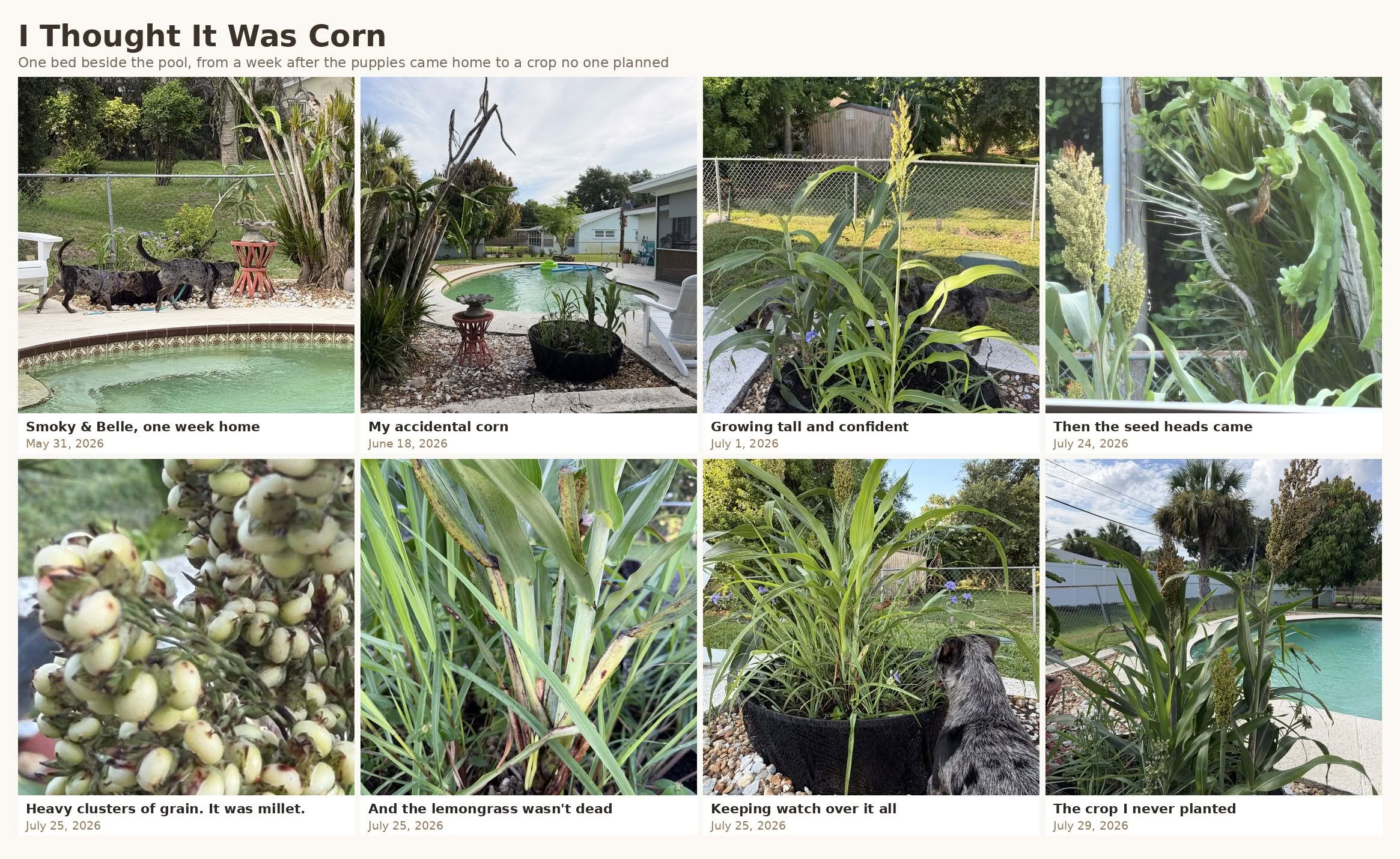
On May 31, my new rescues, Smoky and Belle, had been home for about a week when I noticed something growing in one of the beds beside the pool.
It looked like corn.
This was curious for one fairly obvious reason. I hadn’t planted any corn.
The bed had held lemongrass, but after the winter freeze I was fairly certain I had lost it. Now, in the same spot, several broad green stalks were pushing upward. Smoky and Belle investigated, of course, the way young dogs investigate everything. I started calling it my accidental corn.
And then I watched it grow.
Watching It Grow
Over the next several weeks, the stalks kept getting taller. They had the same confident, upright posture as corn and the same broad leaves. If you had walked past the pool in June, you would have assumed exactly what I did.
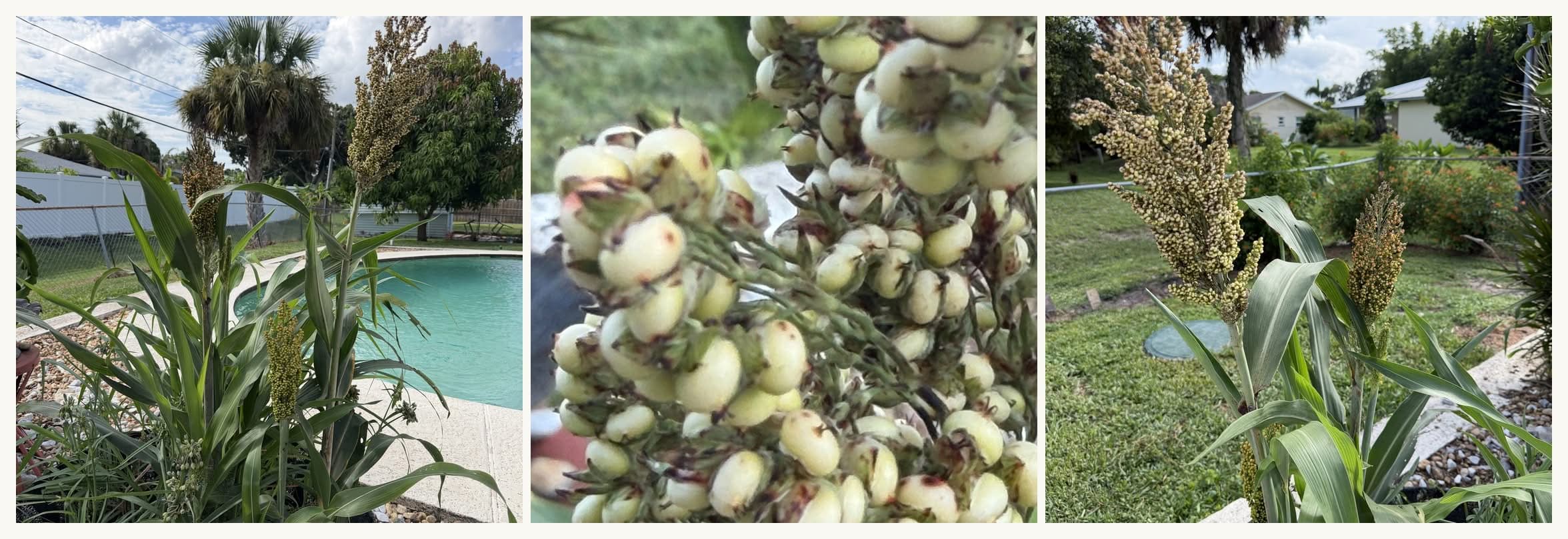
Then the seed heads began to emerge, and my accidental corn started telling a different story. Corn does not head like that. What rose from the top of each stalk was a dense, branching cluster that filled out through July into heavy clusters of grain.
It wasn’t corn. It was millet.
I had my first true volunteer crop.
The birds had planted it. I feed them nearby, and somewhere in the ordinary business of eating, dropping seed, flying off, and coming back, they had started a crop for me. I hadn’t selected the seed. I hadn’t decided where it should go. I hadn’t drawn up a planting plan. I had simply not pulled it out.
The Part I Couldn’t See
And while I was busy watching the millet above ground, something else was happening underneath it.
The lemongrass wasn’t dead.
The plant I had quietly written off after the freeze began pushing new blades up among the millet stalks. It had not been killed. It had survived below what I could see. Now the two of them share that bed, the millet I never planted and the lemongrass I thought I had lost, both thriving in the same square of soil.
What the Bed Taught Me
I have been thinking about that bed.
We tend to assume that stewardship means deciding what should happen and then making it happen. We choose the plant, we choose the place, we carry out the plan. Often that is exactly the work. But this summer that bed reminded me that stewardship can also mean something quieter: recognizing what is already happening and knowing when not to interfere.
Had I been determined to keep that bed according to my original plan, I would have pulled the millet as a weed the week it appeared. Had I been certain the lemongrass was gone, I would have dug it out and replanted. Neither outcome required me to make anything happen. They required me to pay attention long enough to tell the difference between a problem and a gift.
None of it happened in isolation, either. The birds were not visitors to the garden, and the insects were not outsiders. The lemongrass recovering below ground, the millet rising above it, and Smoky and Belle wandering through to inspect it all, none of these are separate from the garden. They are the garden, a set of participants, some I invited and some I did not, each doing its part in the same small space.
The longer I tend this land, the more I notice that the best things in it are rarely the things I forced. They are the things I made room for.
I recognize the same pattern in the systems I build. Software can monitor what is happening, and AI can detect patterns we might otherwise miss. But monitoring is not understanding. A system designed to treat every unexpected change as a problem might have classified the millet as something to remove. It would have done exactly what it was designed to do and still reached the wrong conclusion. What observation gave me was context. The unexpected growth wasn’t a problem at all. Operational intelligence, whether in a garden or a business, begins there: not simply knowing that something changed, but understanding enough to decide what, if anything, to do about it.
Letting the Birds Handle Procurement
So this summer I have kept a closer eye on that bed than on almost anything I actually planted. Some things need to be planted. Some things need to be protected. Some things need time to recover. And occasionally, it turns out, you can let the birds handle procurement.
I thought it was corn. It wasn’t. But I am glad I waited long enough to find out.